
Russia is reportedly developing brain-implanted “spy pigeons” as part of a futuristic surveillance project that aims to use living birds where traditional drones fall short.
The unusual initiative is being developed by Russian tech startup Neiry Group, which claims it has successfully implanted neural chips into pigeons’ brains, allowing operators to gently guide their flight paths remotely. The project, codenamed PJN-1, also involves fitting the birds with compact body-mounted cameras and small backpack-style electronic units.
Pigeons have been used by humans for centuries as messengers, with records dating back to ancient Egypt, where they carried news about agriculture, political events, and flooding along the Nile. While their military role faded with modern technology, Neiry says living birds may now offer advantages over mechanical drones.
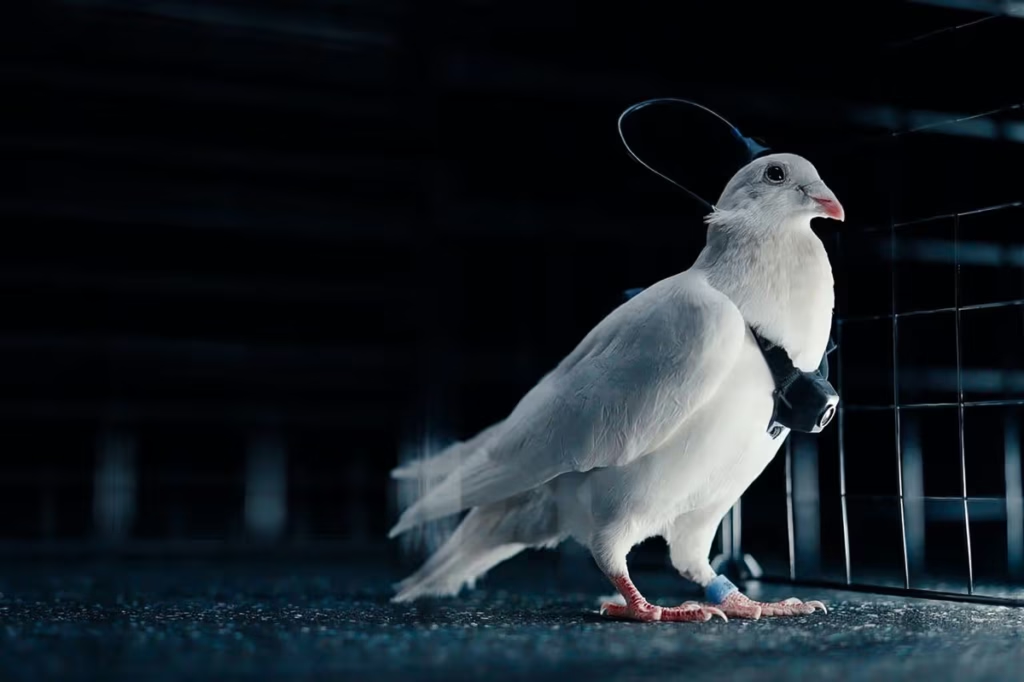
According to the company, the implanted interface works by lightly stimulating specific areas of the bird’s brain, encouraging it to turn left or right while continuing to fly naturally. The system does not override the bird’s instincts but instead guides it along a pre-planned route using GPS signals. Small solar panels attached to the birds help power the equipment.
Neiry says the pigeons do not require special training or conditioning, and claims the implantation process is safe, with “100% survivability” achieved through a stereotactic surgical setup used to place the electrodes.
If the camera system is activated, the company says identifiable details are filtered directly on the device to comply with local privacy laws. Unlike conventional drones, these biological carriers do not need frequent battery changes or landings and can reportedly travel distances of up to 400 kilometers without daily stops.
While pigeons are currently being used in early testing, Neiry’s chief executive Alexander Panov has said the technology could be adapted for other birds depending on the mission. Ravens could be used to carry heavier payloads, while seagulls and albatrosses are being considered for coastal and offshore monitoring.
Neiry claims the system could have applications beyond espionage, including infrastructure inspections, environmental monitoring, coastal surveillance, and search-and-rescue operations, particularly in areas where drones face range or weight limitations.
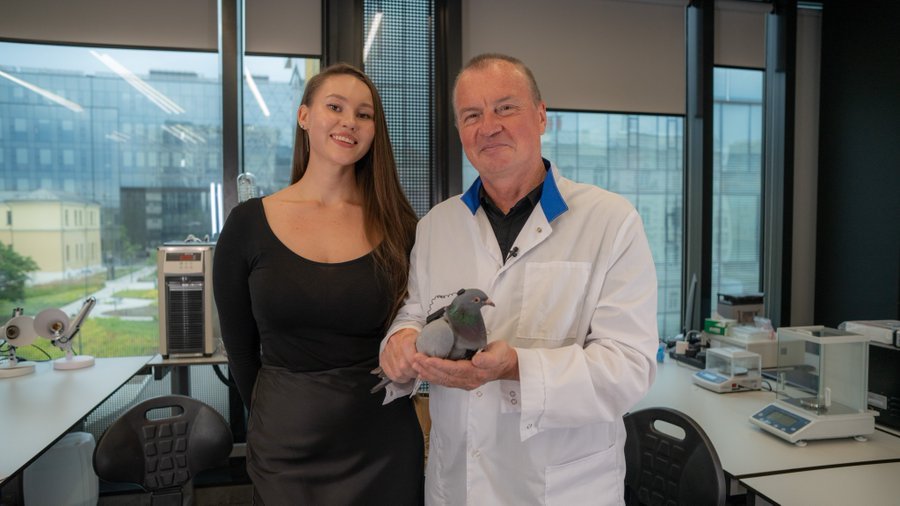
Panov is a vocal supporter of Russia’s war in Ukraine and has publicly urged the military to pursue technological superiority on a battlefield increasingly dominated by unmanned systems. He has also previously spoken about ambitions to develop an advanced form of human, which he referred to as “Homo Superior.”
The firm is understood to have received up to £10 million in funding from the Kremlin, largely through Russia’s National Technology Initiative, a state-backed program launched by President Vladimir Putin in 2014 to promote Russian leadership in global technology.
While ethical concerns around implanting animals with brain-controlling technology have yet to be formally addressed by major animal rights organizations, Neiry insists its system is safe and represents an early real-world use of its neural interface platform.