An engineer in eastern China has taken legal action against his former employer after being fired for taking unusually long and frequent bathroom breaks while on the job.
The case, reported by the Shanghai Federation of Trade Unions and later shared by Chinese media, involves a man surnamed Li from Jiangsu province. Li was dismissed after his company discovered that he had taken 14 bathroom breaks in a single month, with the longest lasting as much as four hours.
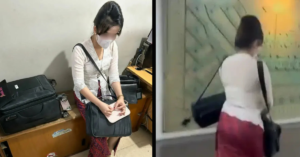
According to reports, Li’s employer submitted surveillance footage during court proceedings to document the length and frequency of his bathroom visits. The company argued that the time Li spent away from his workstation far exceeded normal physical needs.
Li’s role required him to respond promptly to work messages, but the company claimed he failed to reply when contacted during his absences. Under the terms of his contract, leaving one’s post without permission for a certain period counts as absence, and being absent for three working days within 180 days allows immediate termination.
Li argued that his bathroom breaks were caused by haemorrhoids. To support his claim, he submitted haemorrhoid medication purchased by his partner in May and June 2024, as well as inpatient surgery records from January 2025.
However, the court found that the medical records covered a period after the excessive bathroom breaks had already taken place. It was also noted that Li did not inform his employer of his condition in advance or apply for sick leave, as required under company policy.
After reviewing the evidence, the court determined that Li’s bathroom breaks “greatly exceeded” reasonable physical requirements. The company had also sought approval from the labour union before firing him, strengthening its position.
Li, who joined the company in 2010 and signed an open-term contract in 2014, initially sued his employer for 320,000 yuan in compensation, claiming illegal termination.
Following two court hearings, the case was eventually settled through mediation. Taking into account Li’s contributions to the company and the difficulty of finding new employment, the court persuaded the employer to pay him 30,000 yuan (around US$4,200–$5,500) as a settlement.
The case has sparked discussion online, with some siding with the employer and others raising concerns about workplace pressure and employee health rights.