
A college student in the United States has filed a lawsuit against a dating app company after claiming her TikTok videos were used in advertisements without her consent — and in a way that she says was deeply misleading.
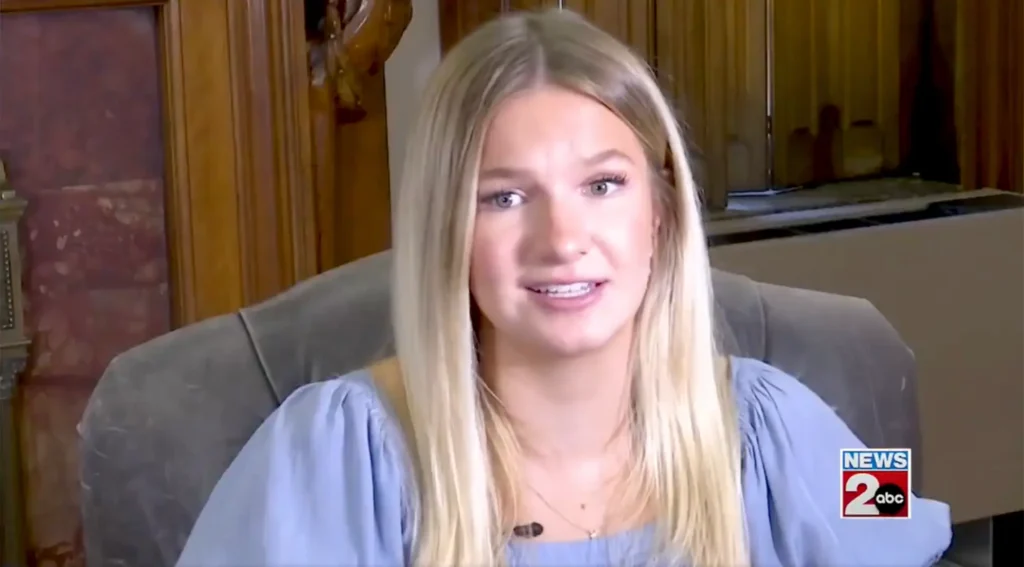
Kaelyn Lunglhofer, a 19-year-old student at the University of Tennessee, alleges that her video was taken and used by a social matchmaking app called “Meete,” which is operated by Quantum Communications Development Limited, a company based in the British Virgin Islands.
According to the lawsuit, the video in question was originally posted on May 31, 2025 — the day Lunglhofer graduated from high school. The clip showed her in her bedroom wearing an orange outfit while music played in the background.
However, she claims a portion of that video was later used in an advertisement for the app without her knowledge or permission.
The advertisement reportedly featured Lunglhofer’s face alongside a voiceover asking viewers: “Are you looking for a friend with benefits?” It also suggested that the app connects users with women nearby who are “looking for some fun.”

Lunglhofer said she was shocked and embarrassed when she discovered the ad. She only became aware of it after someone in her dormitory sent it to her, asking if it was really her in the video.
“They’re making me look like a prostitute,” she said in an interview, describing how upsetting the experience was.
Her attorney, Abe Pafford, argued that the company used her image to promote the app without consent and even targeted the advertisement to men in her local area, including those living in her dorm.
The lawsuit, filed in the U.S. District Court for the Eastern District of Tennessee, accuses the company of misleading advertising and misuse of her likeness. It includes claims under federal law as well as Tennessee state laws related to publicity rights and defamation.
Lunglhofer is seeking at least $750,000 in damages, along with any profits the company made from the ad campaign. She is also asking for the advertisement to be removed entirely.
Despite the large sum, Lunglhofer has said that her goal is not just financial compensation, but also to hold the company accountable and prevent similar situations from happening to others.
The app, which reportedly has around 17 million users worldwide, had not responded to requests for comment at the time of reporting.
Sponsored
People are trying these right now 👇
Available for US users only



She’s going to lose. Tiktok owns all your videos, and they can sell them to whomever they want. It’s likely this company paid for the data because Tiktok will sell it to anyone.
Social media is good for chatting anonymously with strangers while you’re taking a shit, but other than that, it’s not worth it. She’s young and to my understanding, kids aren’t taught about the intricacies of social media data storage and how companies buy and sell this data. Most younger people I work with still think that deleting a picture or post means that it’s gone forever, when in reality, you just deleted the front-end access to it.