Google is seeking federal approval to release up to 32 million specially treated mosquitoes in parts of California and Florida over the next two years as part of an effort to reduce the spread of mosquito-borne diseases.
The proposal is currently being reviewed by the U.S. Environmental Protection Agency (EPA), which is accepting public comments through June 5 before deciding whether to grant an experimental use permit. If approved, the project would become one of the tech giant’s most ambitious public health initiatives to date.
The plan is part of Google’s lesser-known “Debug” initiative, a program launched more than a decade ago to develop new ways of reducing populations of disease-carrying mosquitoes.
How the Mosquito Plan Works
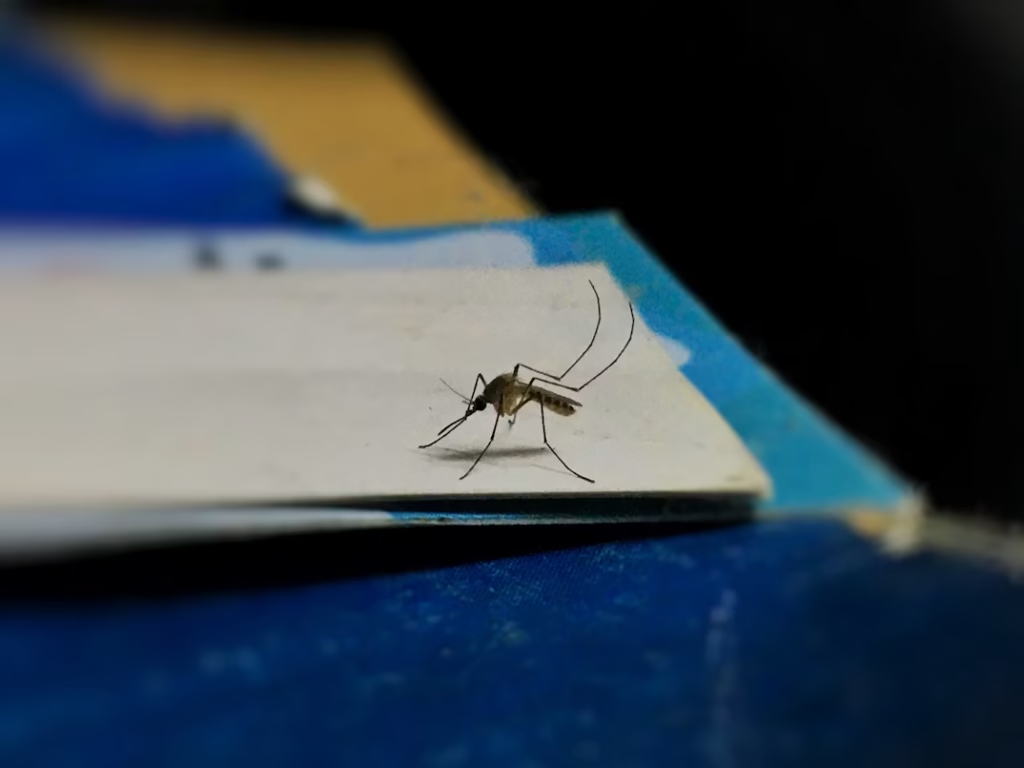
Rather than releasing biting insects, the project would involve releasing male mosquitoes infected with Wolbachia, a naturally occurring bacteria.
Experts say when these infected males mate with wild female mosquitoes, the offspring fail to survive, helping reduce mosquito populations over time. Since only female mosquitoes bite humans, officials say the releases would not increase the number of biting mosquitoes.
Researchers say the proposal specifically targets Culex mosquitoes, a species known for spreading West Nile virus and St. Louis encephalitis.
According to the Centers for Disease Control and Prevention (CDC), West Nile virus remains the leading mosquito-borne disease in the United States.
Existing Tests Show Promise
Mosquito control agencies have been exploring alternatives to traditional pesticide-based methods for years, and some areas have already begun testing similar techniques.
The Florida Keys Mosquito Control District is currently in its second year of using a comparable Wolbachia-based approach.
“It’s a great concept, and we’re putting it to real use to see if it works,” said Chad Huff, public information officer for the district.
Huff explained that Wolbachia only affects mosquitoes and does not pose a threat to humans.
“A male mosquito has never bitten anybody,” he said, noting that infected males are incapable of increasing biting activity.
Officials involved in the testing say they have already observed reductions in mosquito populations in some trial areas, with early results encouraging enough to continue the program.
Public Reaction Mixed
The proposal has received a mixed response from residents.
Some support the idea because of its potential public health benefits.
“I am kind of all for it,” Florida resident Tara Nye said. “Anything to reduce the population here is number one on my agenda.”
Others have expressed caution about releasing millions of mosquitoes, even if they are non-biting males.
“I think it’s interesting,” said resident Brent Nye. “I’m not sure whether I would want them in my backyard because there are going to be a lot of things that go wrong. I’d rather have some other state to experiment on.”
Another resident, Alan Teschner, questioned whether there could be unforeseen consequences from such a large-scale release.
AI and Robotics Behind the Project
Google says artificial intelligence and robotic systems would be used to breed, sort and release the mosquitoes on a scale large enough to make the strategy effective.
The company hopes the approach could help combat diseases including West Nile virus, St. Louis encephalitis, dengue, Zika, chikungunya and yellow fever.
Federal regulators have not yet identified specific locations where the mosquitoes would be released if the proposal receives approval.
Sponsored
People are trying these right now 👇
Available for US users only